Books/Jewish Conquistadors in the New World: Difference between revisions
No edit summary |
No edit summary |
||
| (2 intermediate revisions by the same user not shown) | |||
| Line 2: | Line 2: | ||
<div class="singlebook-div1"> | <div class="singlebook-div1"> | ||
[[File: | [[File: JewishConquistadorsInTheNewWorld.jpg]] | ||
</div> | </div> | ||
<div class="singlebook-div2"> | <div class="singlebook-div2"> | ||
<h2>Jewish Conquistadors In The New World</h2> | <h2>Jewish Conquistadors In The New World</h2> | ||
<strong>Juan Marcos Bejarano Gutierrez</strong> | <strong>By: Juan Marcos Bejarano Gutierrez</strong> | ||
<p> | <p>Three events transpired in 1492 in the Iberian Peninsula, which had tremendous ramifications for years to come. The first was the conquest of Granada, i.e., the last Muslim stronghold, by Castilian and Aragonese forces. The victory ended eight hundred years of Islam-ic rule. The conquest of Granada eventually also led to the conversions of many Muslims to Christianity, the phenomenon of Crypto-Islam, and the eventual expulsion of the descendants of these converts in 1609. | ||
The second event was the Edict of Expulsion, which ended a thousand years of Jewish life in the Peninsula. Jews were given a choice between exile or conversion. Those who converted joined the already significant ranks of the existing Converso class, which by this time numbered in the hundreds of thousands. The Conversos, i.e., Jewish converts to Christianity typically under duress, had been at the center of a religious and political crisis that had lasted for more than a century. Many Conversos had been met with discrimination and violence as their true loyalties were often disputed. | |||
<br><br> | |||
The last event of note was the discovery of the New World by Christopher Columbus.....</p> | |||
</div> | </div> | ||
<!-- BUY NOW button area (div3) --> | <!-- BUY NOW button area (div3) --> | ||
Latest revision as of 15:19, 3 January 2026
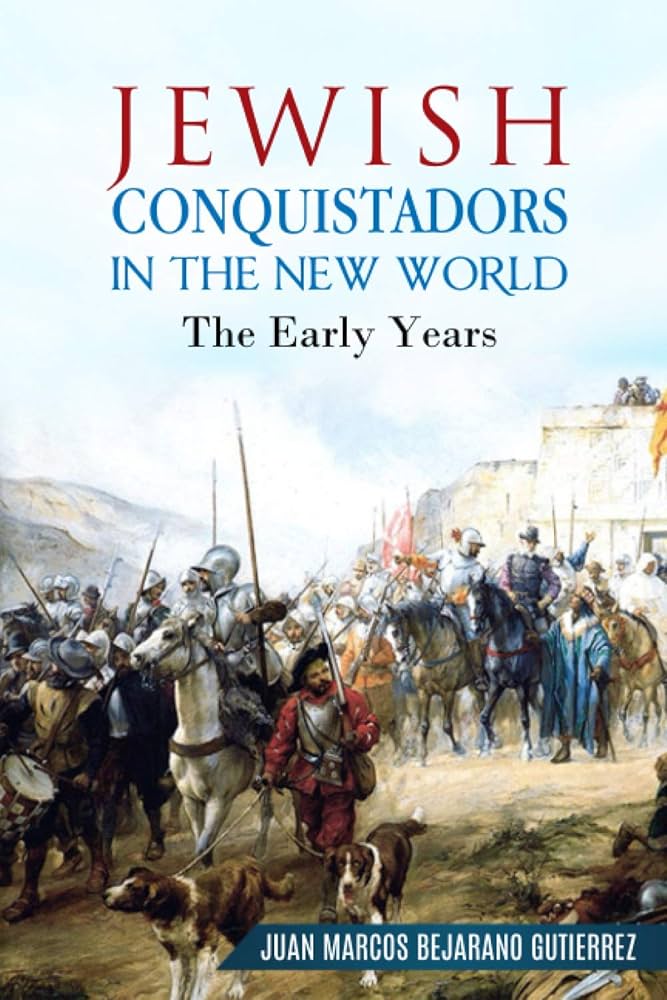

Jewish Conquistadors In The New World
By: Juan Marcos Bejarano Gutierrez
Three events transpired in 1492 in the Iberian Peninsula, which had tremendous ramifications for years to come. The first was the conquest of Granada, i.e., the last Muslim stronghold, by Castilian and Aragonese forces. The victory ended eight hundred years of Islam-ic rule. The conquest of Granada eventually also led to the conversions of many Muslims to Christianity, the phenomenon of Crypto-Islam, and the eventual expulsion of the descendants of these converts in 1609.
The second event was the Edict of Expulsion, which ended a thousand years of Jewish life in the Peninsula. Jews were given a choice between exile or conversion. Those who converted joined the already significant ranks of the existing Converso class, which by this time numbered in the hundreds of thousands. The Conversos, i.e., Jewish converts to Christianity typically under duress, had been at the center of a religious and political crisis that had lasted for more than a century. Many Conversos had been met with discrimination and violence as their true loyalties were often disputed.
The last event of note was the discovery of the New World by Christopher Columbus.....